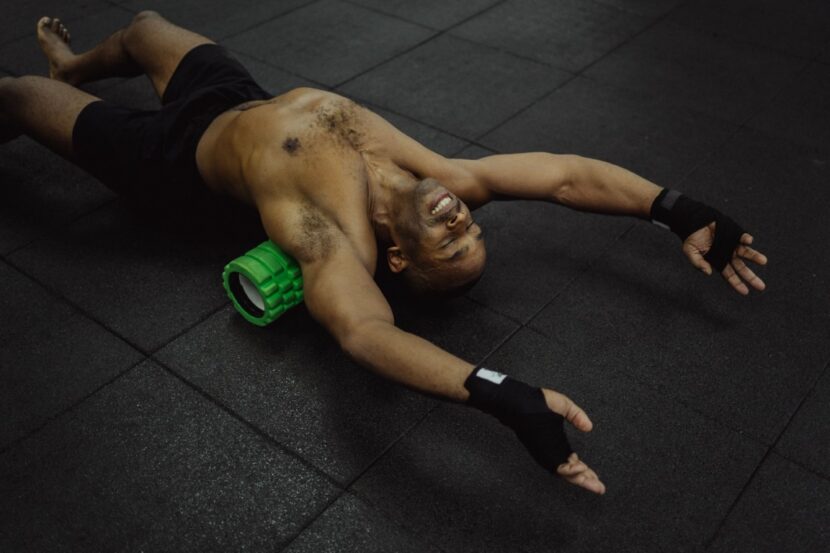
Stretching and foam rolling are useful tools. Most active people use them because they feel accessible, they can be done at home, and they often provide at least some short-term relief.
The problem is not that these tools are bad. The problem is that they have limits, and those limits become more obvious when the same tightness keeps returning.
Stretching can help maintain mobility and improve how a muscle feels after training. It can also become part of a good warmup or cooldown routine when it is used in the right context.
What stretching cannot always do is explain why the muscle became tight in the first place. A hamstring may feel restricted because the hamstring itself needs attention, but it may also be working harder because another part of the body is not doing its job well.
Foam rolling has a similar place in an athlete’s routine. It can reduce the perception of soreness and may improve range of motion for a short period of time.
That can be valuable after a hard workout. It does not mean a foam roller can identify the source of a movement problem or reach every layer of tissue involved.
A foam roller applies broad pressure. It cannot adjust based on what the tissue feels like, and it cannot tell the difference between a muscle that needs focused work and an area that is already irritated.
That is where hands-on care becomes different. Sports massage gives the body more specific attention than most self-care tools can provide.
What Sports Massage Does Differently
A sports massage therapist does more than apply pressure. The work begins with noticing how the tissue responds and adjusting the session from there.
That is the first major difference between a roller and a trained therapist. A roller treats the surface it contacts in the same way each time, while a therapist can change pressure, pacing, and direction based on the area being treated.
This matters because tightness is not always simple. One area may feel dense and guarded, while another may be sensitive because it has been compensating for too long.
Sports massage techniques are also more targeted than most self-care routines. Trigger point work can focus on a specific irritated area that refers discomfort elsewhere.
Myofascial work can address restrictions in the connective tissue around the muscle. Cross-fiber techniques can be used carefully when a therapist is trying to support better tissue mobility in a focused region.
The goal is not to force the body into change. The goal is to work with the tissue in a way that helps it move better and tolerate training more comfortably.
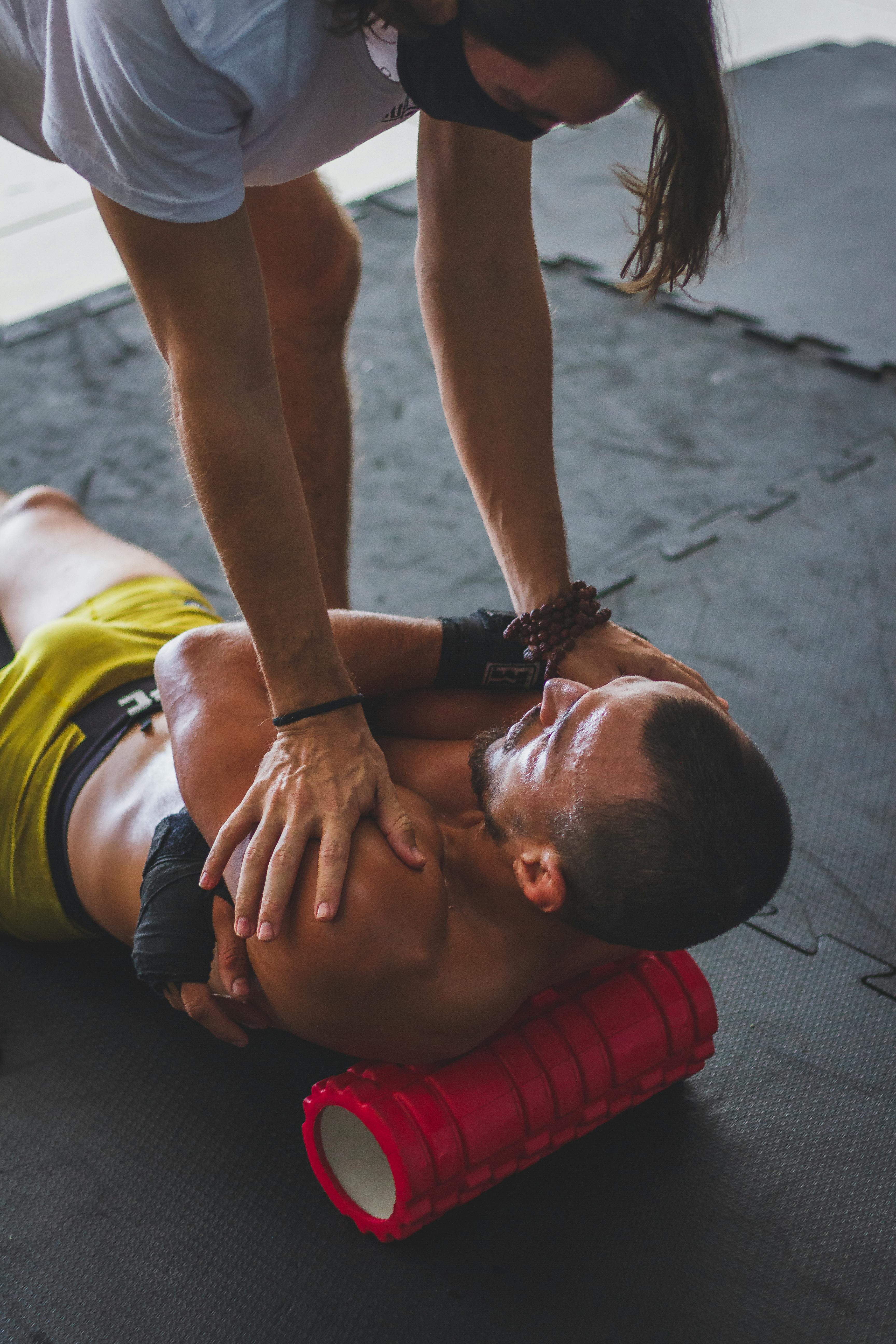
Research on massage and athletic recovery is not a simple claim that massage improves everything. The stronger case is that massage can support recovery by helping with soreness, perceived fatigue, pain, relaxation, and flexibility for some people.
That is still meaningful for athletes. If recovery feels better and movement feels less restricted, training can become more sustainable.
Compensation Patterns Are The Problem Self-Care Cannot Always See
A lot of recurring pain begins as a workaround. When one area is weak, irritated, or recovering from strain, the body often asks nearby tissue to take on more work.
At first, that compensation can be helpful. It lets the person keep moving while the original area is not performing normally.
Over time, the workaround can become its own problem. The tissue doing extra work may tighten, become tender, or begin creating pain that seems unrelated to the original issue.
This is one reason self-care can feel frustrating. Someone may keep rolling the same tight spot without realizing that the tight spot is only responding to a larger movement pattern.
A runner is a common example. If the hip is not stabilizing well, the body may create extra tension through the outside of the leg or around the knee.
Rolling the irritated area may help it feel better for a while. It may not address why that area keeps getting overloaded.
A sports massage therapist can help identify which tissues appear to be overworked and where movement feels restricted. That does not replace strength work or physical therapy when those are needed, but it can make the athlete more aware of the pattern.
At Massage Matters, that distinction is important. The session is not only about chasing the sore spot. It is about understanding why the sore spot keeps asking for attention.
Why Post-Injury Recovery Needs More Than Pain Relief
After an injury starts to feel better, many athletes assume the problem is over. The swelling may be down, daily movement may feel normal, and the pain may no longer be the first thing they notice.
That does not always mean the body is ready for full training. Healing tissue can still feel stiff, guarded, or less elastic than it was before the injury.
The body may also keep using the compensation pattern it adopted during the injury. Even after the original area improves, the muscles that carried extra load may not automatically return to normal.
This is where injury recovery massage can be useful in the later stages of healing. It can support soft-tissue mobility, help reduce guarding, and address areas that became restricted while the athlete was protecting the injured region.
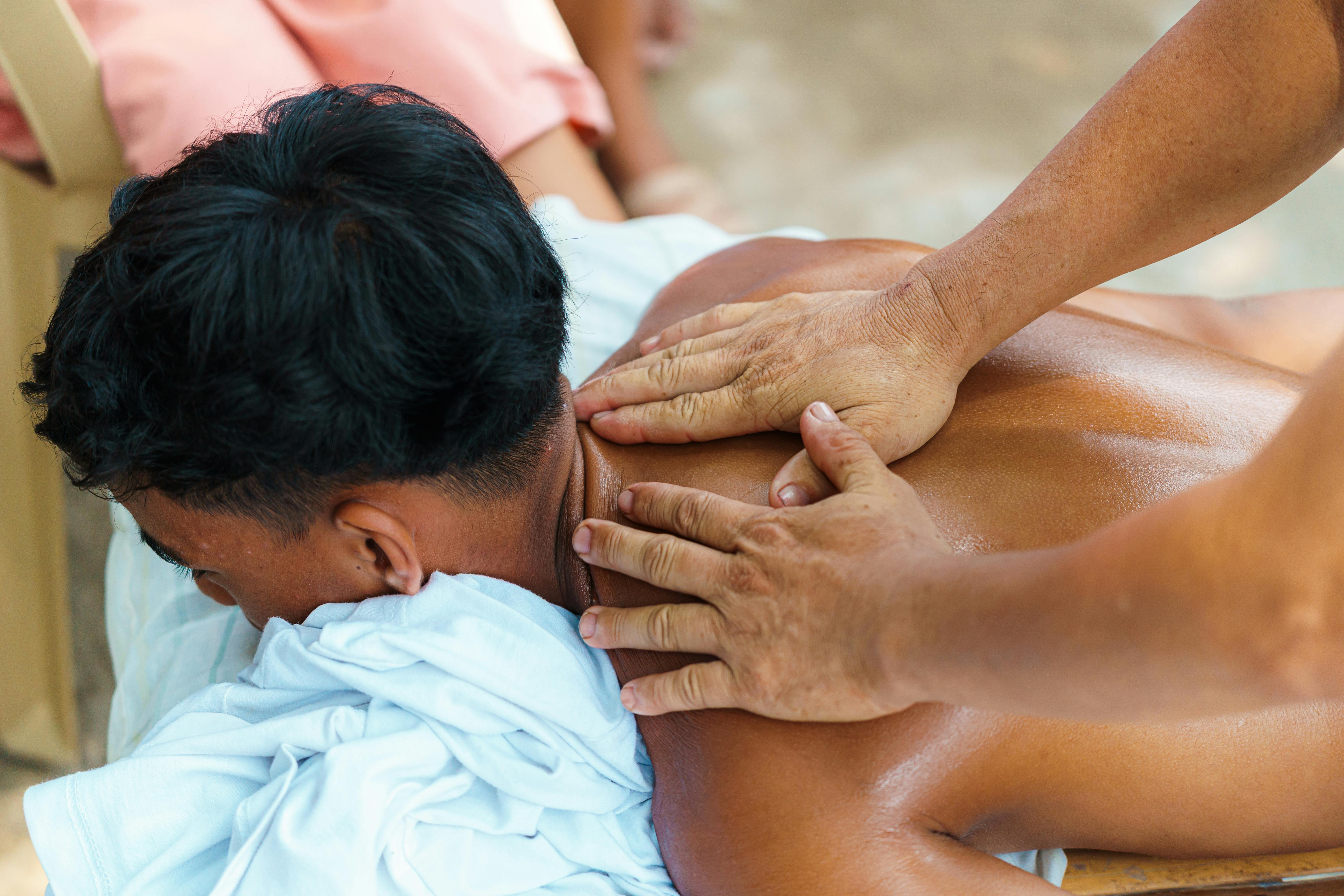
Timing matters. A fresh injury with sharp pain, significant swelling, bruising, or suspected structural damage should be evaluated by a medical professional before massage is considered.
Once the appropriate stage of recovery is reached, hands-on work can help the athlete transition from “not hurting” toward better movement. That is an important difference.
The goal is not simply to make the area feel good for an hour. The goal is to help the body tolerate normal loading again without working around a restriction it no longer needs.
Why This Matters For Orange County Athletes
Orange County athletes have one advantage that can also become a problem. The weather allows people to train year-round.
That consistency is great for fitness. It also means the body may not get the natural off-season that colder climates create.
Runners can keep building mileage through winter. Surfers can stay active throughout the year, and gym training does not need to pause because the season changed.
When training never really stops, recovery has to become more intentional. Otherwise, small restrictions can accumulate until they start affecting performance or comfort.
Sports massage fits that environment because it gives active people a structured way to address the tissue stress that builds over time. It is not only for competitive athletes.
It can help recreational athletes who train hard before work, parents who play weekend sports, or anyone who notices the same tightness returning no matter how often they stretch. The common factor is repeated load on the same tissues.
For Orange County athletes, regular bodywork can become part of staying active rather than something reserved for when pain has already disrupted the routine.
When To Book A Sports Massage
A sports massage may be worth considering when the same tight area keeps coming back after stretching or foam rolling. It may also help when soreness lasts longer than usual or movement feels limited despite a normal warmup.
The timing does not have to be dramatic. Many athletes benefit from booking before a small issue becomes a bigger interruption.
It is also useful after a training block, race, tournament, or return from injury when the body has been under more stress than usual. In those moments, hands-on work can help restore a better sense of movement and recovery.
Stretching and foam rolling still belong in the routine. They are simple, useful tools that can help athletes stay connected to how their bodies feel.
Sports massage fills a different role. It gives the athlete a more targeted recovery option when self-care is no longer enough.
For athletes looking for sports massage in Orange County, the best reason to book is not that stretching failed. It is because the body is giving the same signal repeatedly, and it may need more specific attention than a roller or stretch can provide.
Massage Matters
+17142423390
16525 Von Karman Ave E, Irvine, CA 92606